Health and Safety Policy for Flat Clearance Charlton
![A person wearing a light blue long-sleeved shirt is seen throwing a crumpled clear plastic bottle into a black, slatted metal outdoor rubbish bin situated on a paved area. The background features a modern building with glass windows and a small landscaped section with green bushes, typical of an urban or commercial environment. This scene illustrates waste disposal for general rubbish, aligning with services offered by Flat Clearance Charlton in the local [POSTCODE] district, emphasising responsible waste management and proper recycling practices in the area. The lighting appears natural, indicating daytime, and the overall setting suggests a routine litter disposal activity outside an office or residential building in the vicinity of Charlton. The image effectively captures the action of rubbish disposal, focusing on the handling of plastic waste as part of everyday cleanliness and waste management routines.](/pub/_photos/rubbish/f1341374464.jpg) This Health and Safety Policy sets out the principles and procedures Flat Clearance Charlton follows to protect staff, clients and the public during all flat clearance and rubbish removal activities. The purpose of this policy is to create a clear, consistent framework for safe working across our rubbish company service area and associated tasks. It applies to every worker, contractor and visitor engaged in clearance operations and waste handling for the organisation. All activities are carried out with the objective of minimising risk and ensuring compliance with governing health and safety duties.
This Health and Safety Policy sets out the principles and procedures Flat Clearance Charlton follows to protect staff, clients and the public during all flat clearance and rubbish removal activities. The purpose of this policy is to create a clear, consistent framework for safe working across our rubbish company service area and associated tasks. It applies to every worker, contractor and visitor engaged in clearance operations and waste handling for the organisation. All activities are carried out with the objective of minimising risk and ensuring compliance with governing health and safety duties.
The scope of this policy covers hazard identification, risk assessment, control measures, training, supervision and monitoring for routine and non-routine clearance work. It is applicable to domestic and commercial flat clearances, bulky rubbish collection, recycling coordination and the management of residual waste in our rubbish removal service area. The policy also governs the selection of equipment, safe lifting techniques, and the use of personal protective equipment. We emphasise prevention and continuous improvement, and require staff to apply sound judgement when operating in diverse environments.
 Risk assessment is the foundation of safe operations in a rubbish clearance service. Before any job, a competent person will perform a site-specific assessment to identify hazards such as sharps, biohazardous material, asbestos-containing items, unstable furniture and chemical contaminants. Controls will be implemented following the hierarchy of risk control: elimination, substitution, engineering controls, administrative controls and finally personal protective equipment (PPE). All assessments will be documented and communicated to the crew prior to commencement.
Management is responsible for ensuring that this policy is implemented. Supervisors will plan tasks, allocate resources and confirm that risk controls are in place. Employees have a duty to follow safe systems of work, to report hazards and to participate in training. Contractors operating within our rubbish collection service area must demonstrate equivalent safety standards and provide evidence of competence, insurance and appropriate risk management arrangements. Everyone involved is empowered to stop work if there is an immediate risk to health or safety.
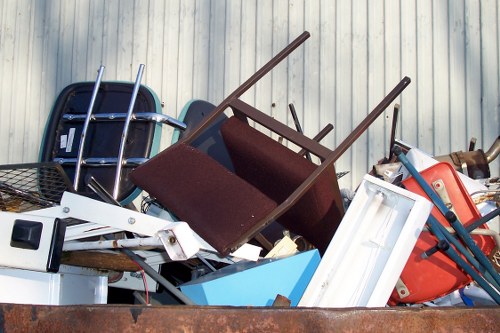 Training and competence are essential. Staff involved in clearance and refuse handling will receive induction training, task-specific instruction and periodic refresher courses. Topics include manual handling, correct use of lifting aids, safe operation of trolleys and vehicles, handling sharps and hazardous wastes, and the use of respiratory protection where necessary. Training records will be maintained and reviewed. Emphasis is placed on supervision of new staff and apprentices until they reach the required standard.
To ensure consistent practice across our rubbish clearance service area we require the following basic safety controls, which form part of our standard operating procedures:
- PPE such as gloves, high-visibility clothing, safety boots and eye protection;
- Safe segregation of recyclable, combustible and hazardous wastes;
- Clear access routes and secure stacking procedures to prevent collapse;
- Sharps handling protocols and immediate reporting of exposures.
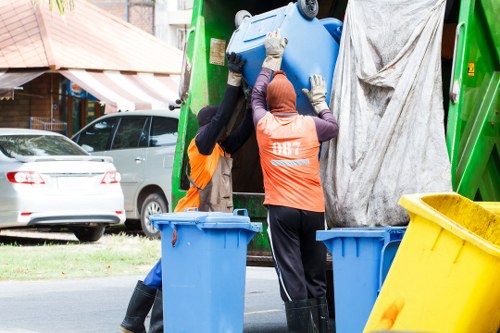 Vehicle safety, load security and transportation standards are critical. Drivers will perform vehicle checks, ensure appropriate restraint of loads and follow safe loading practices to prevent shifting of waste during transit. Vehicles used in our rubbish collection and clearance service must be well maintained and equipped with spill kits and first aid supplies. Specific procedures govern the transportation of hazardous items and the coordination with licensed disposal facilities to maintain compliance with waste duty of care.
Incidents, near misses and occupational ill-health must be reported and investigated. The policy outlines the process for incident notification, immediate containment, investigation, root-cause analysis and corrective actions to prevent recurrence. Emergency procedures include on-site first aid, safe isolation of hazards, notification of emergency services where required and secure preservation of the scene pending investigation. Continuous monitoring and proactive safety inspections are used to identify trends and improve controls.
 Documentation and review are integral. Records relating to risk assessments, training, vehicle checks, incident reports and contractor compliance will be retained in accordance with retention schedules. The policy will be reviewed at least annually and sooner if there are significant changes to operations, legislation or following a serious incident. A summary of responsibilities is provided below to support clarity and accountability:
- Leadership: ensure adequate resources and compliance;
- Supervisors: implement controls and confirm competence;
- Employees and contractors: follow procedures and report hazards.
Commitment and Compliance
Flat Clearance Charlton is committed to a high standard of health and safety performance across its rubbish removal operations. This policy will be communicated to all employees and made available to contractors working within our service area. Compliance with this policy is mandatory and will be supported by auditing, performance monitoring and corrective action where necessary. The aim is to protect people, property and the environment while delivering an efficient and responsible rubbish clearance service.
Review and Continuous Improvement
Regular review cycles and feedback from operational teams will drive improvements to the safety management system. We will benchmark practices, learn from incidents and integrate innovations that reduce risk. This policy represents our formal commitment to safe working in the rubbish company service area and provides a framework for ongoing risk control, training and responsible waste management.
Signed on behalf of management: (policy owner and review date recorded internally). This document does not replace statutory requirements; it complements them and should be read alongside applicable legislation and industry guidance.